
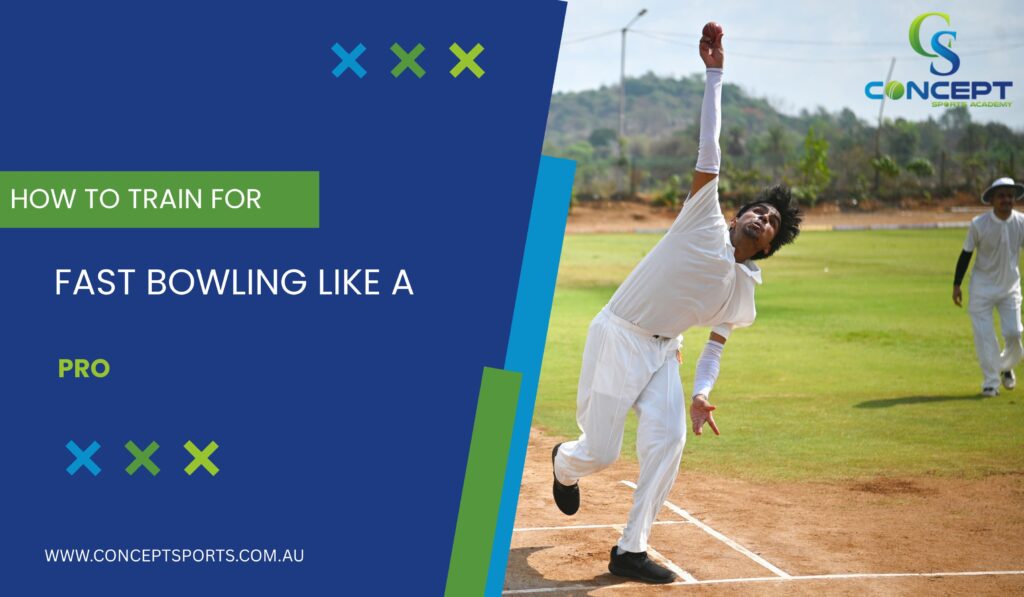
Cricket is a game that requires fast bowling as one of its most challenging skills. It demands power, quickness, rhythm, accuracy, and discipline of mind. Being a beginner pacer or a seasoned bowler who wants to polish your performance, the appropriate training style can be of great help.
By employing a slow build-up speed, which is safe and effective, you can develop pace just like the professionals with a combination of technique, fitness, and constant practice.
1. Build a Strong, Athletic Foundation
Slow bowling is extremely straining to your legs, core, shoulders and back. This is the reason why professional bowlers get to be like athletes. Begin with simple strength training. Squats, lunges, deadlifts, push-ups, planks, and pull-ups are some of the exercises that contribute to stability and explosive power.
Pay particular attention to your core as it regulates the balance and transfers power when delivering the strike. Having a powerful and firm body will keep you out of trouble, and you are more likely to produce pace without falling out of control.
2. Master Your Run-Up and Rhythm
Your strength starts with your run-up. It does not have to be long; it must be smooth, steadfast, and blasting. It takes months of practice by professional fast bowlers before they manage to have a repeatable run-up.
Begin on your steps and rehearse them until you are comfortable with a rhythm. Even-paced, relaxed running up will give more momentum at the crease, enhance accuracy and less wastage of energy.
Do not take a jumpy step, stutter, or over-stride. The smoother you are, the faster you are released and at what time.
3. Improve Bowling Action and Technique
Everything depends on how you act, speed, accuracy, and risk of being injured. Train to have a side-on or semi-open bowling motion, which will permit your hips and shoulders to turn completely. Hold your bowling arm high, your front arm firm, and your head steady till released.
Novices are advised to be upright and land safely in the crease. Pros work on the angles of their wrist, the smooth position of their seam and follow-through to get the most out of the off-pitch movement.
Record your performance or have a coach observe you frequently. Even minor corrections can bring about major changes.
4. Develop Speed Through Drills
Turbo bowlers are conditioned to moderate speed. To develop explosive strength, add sprint exercises, medicine-ball tossing, and bounding.
Bowling with a slightly heavier ball is one of the good exercises to do during training sessions, it makes your shoulders stronger and your arm faster. Then put on your regular ball and experience the difference.
Target bowling is another exercise that is not complicated yet effective. Practise on a small spot on the pitch in order to perfect the line and consistency. Once you have speed and accuracy, then you are a real fast bowler.
5. Concentrate on Injury Prevention and Recovery
Even professional bowlers of the fast category take the business of recovery just like training. The use of ice therapy, stretching, hydration, and rest is required.
Do not disregard the pains in the lower back, shoulders or knees; these are the typical stress points of fast bowling. Before each session, warm up properly, and after each session, cool down.
Conclusion
Being like a professional fast bowler is a combination of fitness, technique, power, and prudent recovery. When you develop strength, perfect your action, and adhere to regular practice schedules, you will find your pace and power increase at a gradual yet steady rate.
Through training and hard work, you will be able to bowl faster, safer and more confidently, just like the professionals.